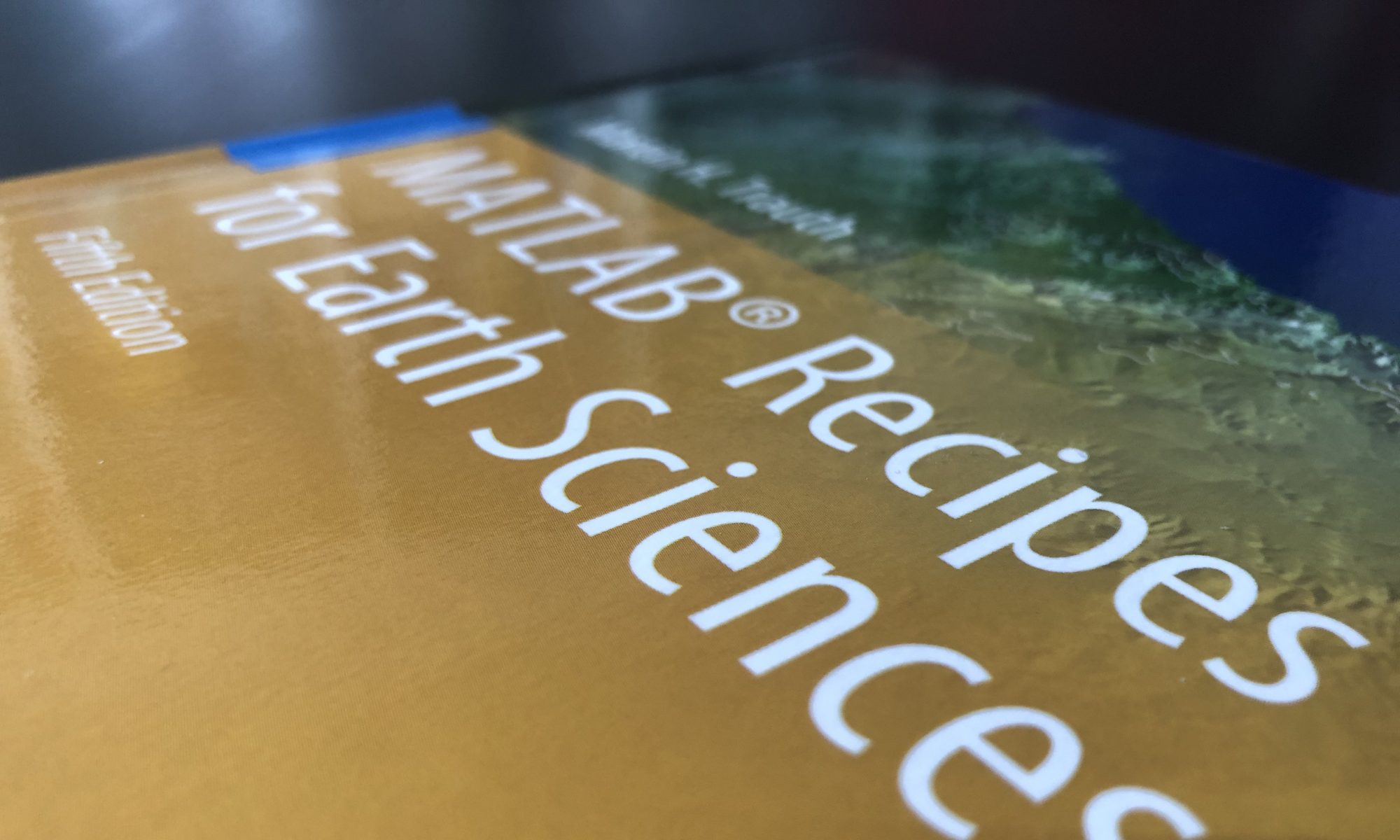

Last week, I taught my traditional fall course on data analysis in the geosciences to a class of just 14 students, only 8 of whom were actually participating live online. Have courses like this become obsolete?
Strictly speaking, I had already taught my first courses on this topic while working on my dissertation more than 30 years ago, but the current series of courses in data analysis in geosciences with MATLAB, in collaboration with UP Transfer GmbH, has now been running for 24 years. Traditionally, there has been a fall course at the University of Potsdam; since the pandemic, it has been held online. In addition, I have taught numerous courses by invitation at various locations, from Providence to Wellington, and from Stockholm to Nairobi. A course at Ghent University had 65 participants, and an online course offered as part of a summer school even had over 70 participants.
MATLAB has since lost some of its popularity, especially compared to the free alternative, Python, despite all its drawbacks. I responded by learning Python myself, and my second Python book is now in print. Unfortunately, MathWorks clings to its old business model, burdening the already strained budgets of universities—and thus their staff and students—with absurd costs for using its software, instead of offering it free of charge to the academic community. Furthermore, significant portions of the software are not open source, contrary to the now widespread call from the scientific community to fully disclose computer code used to analyze scientific data.
As free alternatives to MATLAB become available, the number of free, pre-recorded courses online is growing—and now AI is helping with programming; it seems you do not even have to take a course on MATLAB or Python. Of course, we all use AI to help with programming these days, but I’m convinced that you should only do so once you’ve learned to program yourself. Only then will you be able to understand AI-generated solutions and identify and correct potential errors in the code.
Free alternatives and AI—there’s no doubt that this poses a threat to the business model of those who continue to offer in-person data analysis courses. I’m in touch with many of them on LinkedIn, and their experiences are very similar. They also all have experiences similar to mine at the end of a course like the one last week. After spending the week exploring a wide range of methods—always using simple, mostly synthetic examples and just a few lines of computer code—Friday afternoon is traditionally set aside for an open discussion.
After spending the week exploring a wide range of methods—always using simple, mostly synthetic examples and just a few lines of computer code—Friday afternoon is traditionally set aside for an open discussion. Participants have the opportunity to present examples from their own research and ask questions, which we then discuss together. However, the discussion quickly turned to much more fundamental topics—in particular, of course, the role of AI in science and coding.
Even though the course was entirely online, even those participants who had tended to keep their cameras off during the course turned them on—which I, as the instructor, found very unfortunate. It was a very personal discussion, and I got the impression that no one really wanted to leave the Zoom session. The discussion centered on issues that affect us all—and the younger participants, in particular, much more than I do at the end of my career.
Another thing that surprised me—and still bothers me—was how hard it was to actually find courses like mine online—despite having nearly 10,000 followers on LinkedIn and doing a lot of advertising there. One participant said he had Googled courses and found mine listed fourth on Google. Some did indeed find me on LinkedIn, while others came based on recommendations. Now that they obviously enjoyed the course, I’m wondering: how can I—and my colleagues who offer similar courses—better reach those who are looking for in-person courses? And how can we explain to those who aren’t initially considering live classes that they’re good for them?
Of course, the courses aren’t free—for one thing, they’re very time-consuming, and at the end of the day, they help me pay for things like editing my books. In fact, my editor earns more from my books than I do, and I’ve been wondering for a while now whether an AI solution wouldn’t be perfectly sufficient. I don’t think 300 Euros for a full week of in-person classes with post-course support is too much; at least it wasn’t years ago—I haven’t changed the price in 20 years. But I actually asked people what they’d be willing to pay for the course, and they said 30 Euros—which was very frustrating.
Well, right now I’m still feeling really inspired by last week’s experience, with an amazing audience from all time zones! One participant from the U.S. joined at 2 a.m. local time, while others were from Nepal and Thailand—I’m truly very touched. But once my initial enthusiasm has faded a bit, I’m sure I’ll start thinking again about whether I should stop teaching live online courses.
References
Trauth, M.H. (2025) MATLAB Recipes for Earth Sciences – Sixth Edition. Springer International Publishing, 567 p, https://doi.org/10.1007/978-3-031-57949-3.
Trauth, M.H. (2024) Python Recipes for Earth Sciences – Second Edition. Springer International Publishing, 491 p., https://doi.org/10.1007/978-3-031-56906-7.
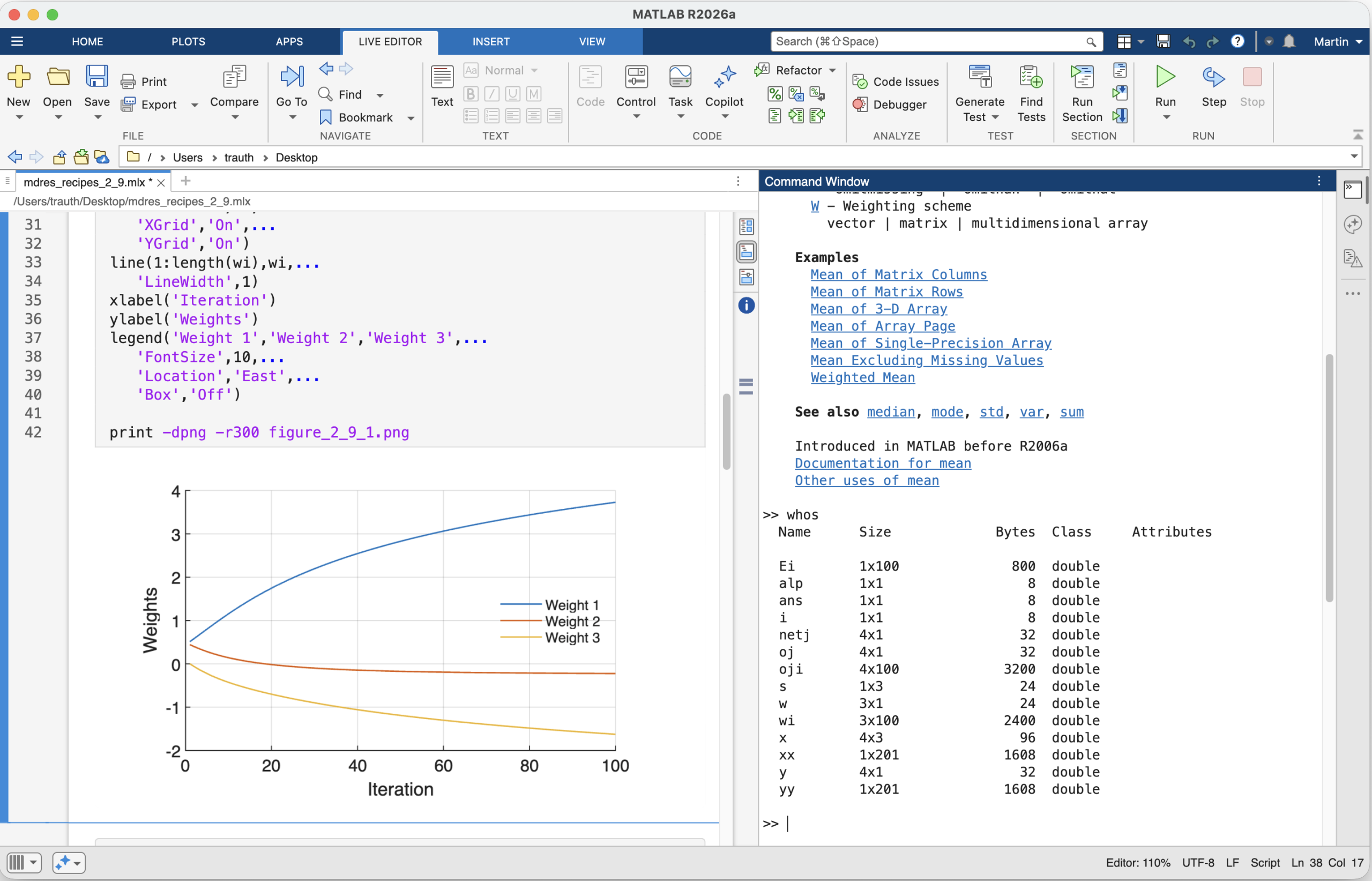
Photo: Karla Fritze