
Now that both new editions have been published, the MRES and PRES books can be used as a MATLAB-Python and Python-MATLAB dictionary. Continue reading “Using MRES and PRES as a Dictionary Between MATLAB and Python”
Martin H. Trauth, University of Potsdam, Germany
Now that both new editions have been published, the MRES and PRES books can be used as a MATLAB-Python and Python-MATLAB dictionary. Continue reading “Using MRES and PRES as a Dictionary Between MATLAB and Python”

This week, the practical on data acquisition with LEGO Mindstorms, spectral and 3D cameras and smartphone sensors is running again. A lot has changed in the use of smartphone sensors in recent years, both on smartphones with MATLAB Mobile and on MATLAB Desktop – here is the update!
Continue reading “Mobile Phone Sensor Data Collection with MATLAB – Update”
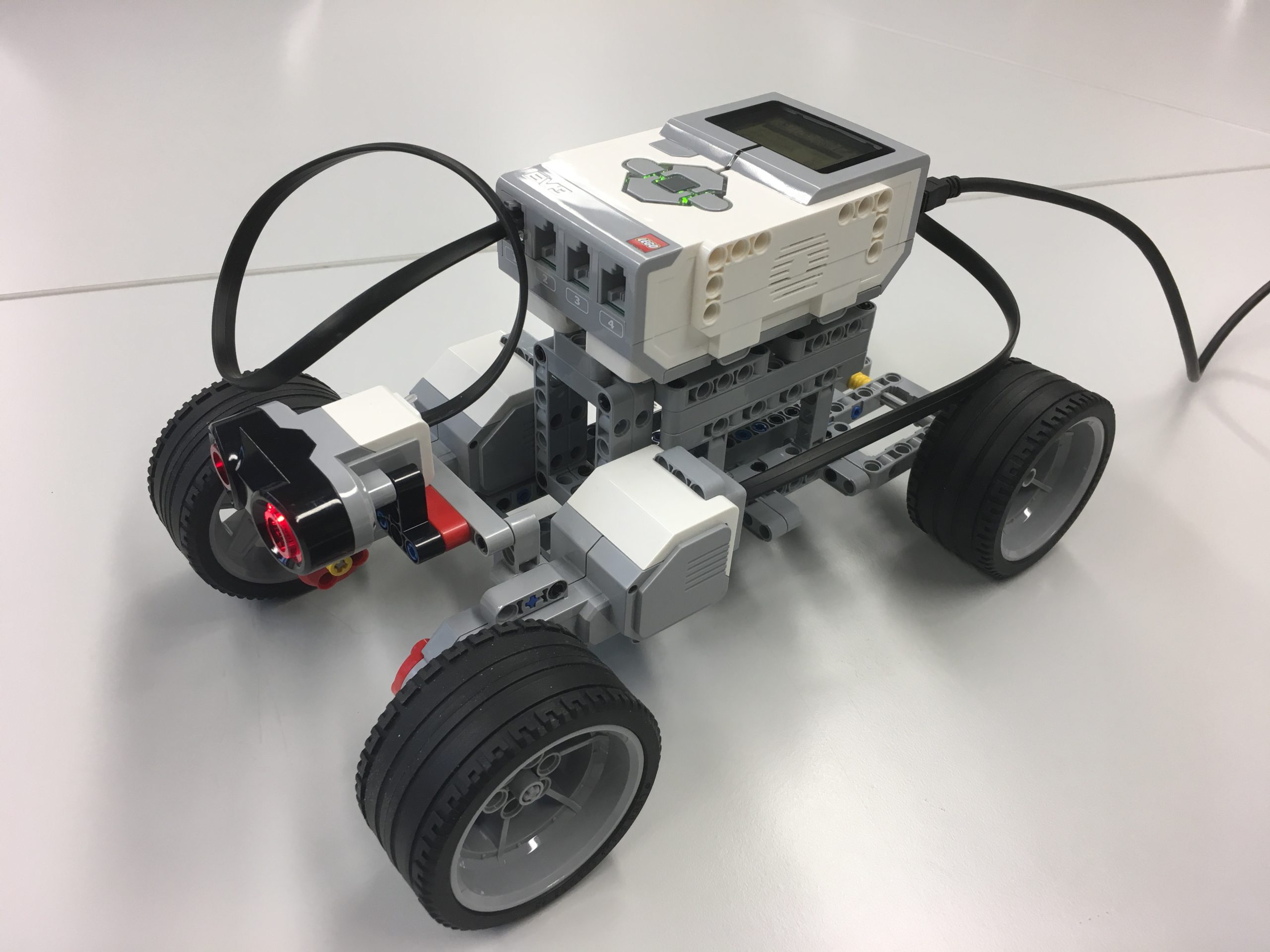
A LEGO vehicle with two motors and an ultrasonic sensor that stops 30 cm in front of an obstacle and then reverses was one of the first programming exercises in the data acquisition practical that we developed in 2017. We used the MATLAB Support Package for LEGO MINDSTORMS EV3 Hardware to connect the LEGO vehicle with MATLAB Desktop on a computer to solve for Exercise #2. While this support continues to be offered for Windows, Linux and macOS (Intel), it is not available for macOS (Apple Silicon). Exercise #15 uses a Python solution for programming the LEGO vehicle – but do not expect too much! Continue reading “Controlling Motors and Read Sensors of LEGO MINDSTORMS with Python”
This exercise is intended to help students to understand how to communicate with the LEGO MINDSTORMS EV3 brick using Python. Continue reading “Python/LEGO MINDSTORMS Exercise #15 Controlling Motors by Sonic Sensor”

In 1994, as part of my doctorate, I programmed a graphical user interface for an adaptive filter using MATLAB. I have continued to develop the code over the past 30+ years. Here is the story of sustainable MATLAB code in four chapters.
Continue reading “Sustainable Code for GUI Tools / Apps with MATLAB”
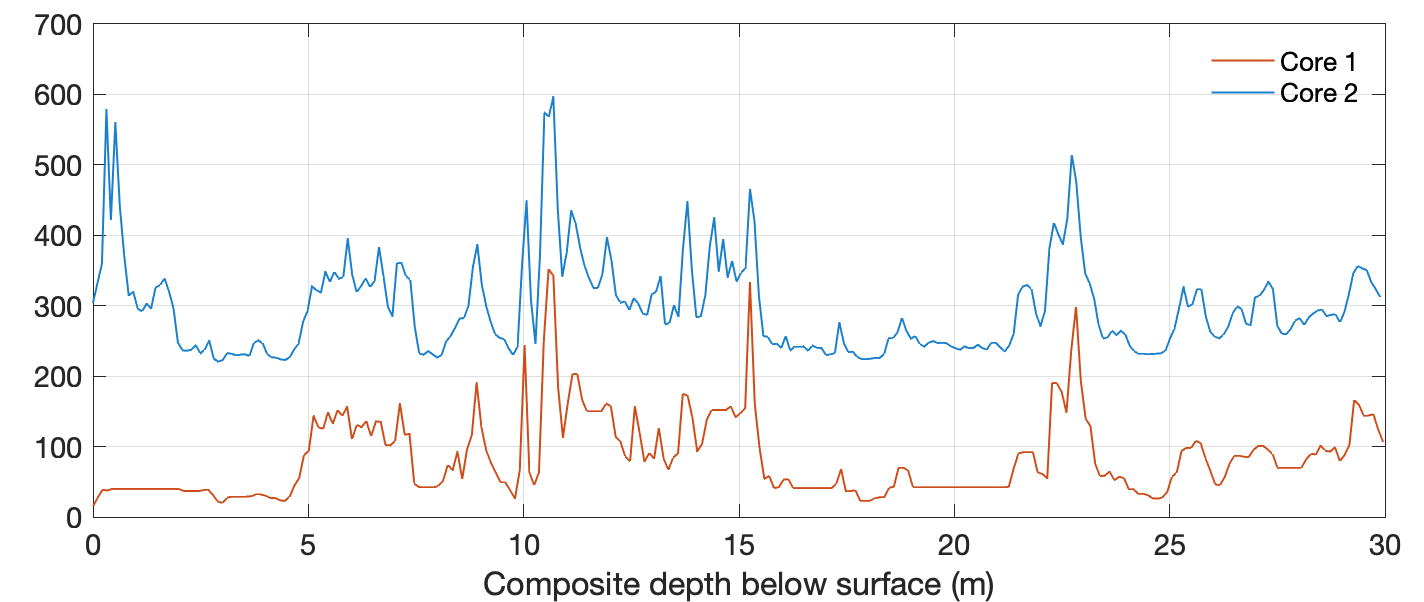
In geological drilling projects, two or more parallel cores often collected in order to compensate for core losses during drilling by overlapping sequences. Correlation of the core is a time-consuming and complex process that is usually done by very experienced geologists. Yesterday I posted the script for manual correlation of core records based on visual inspection of the record of sediment physical properties. This post explains how to use dynamic time warping for automated correlation of cores. Continue reading “Stratigraphic Correlation of Multiple Sediment Cores Using MATLAB, Part 2”
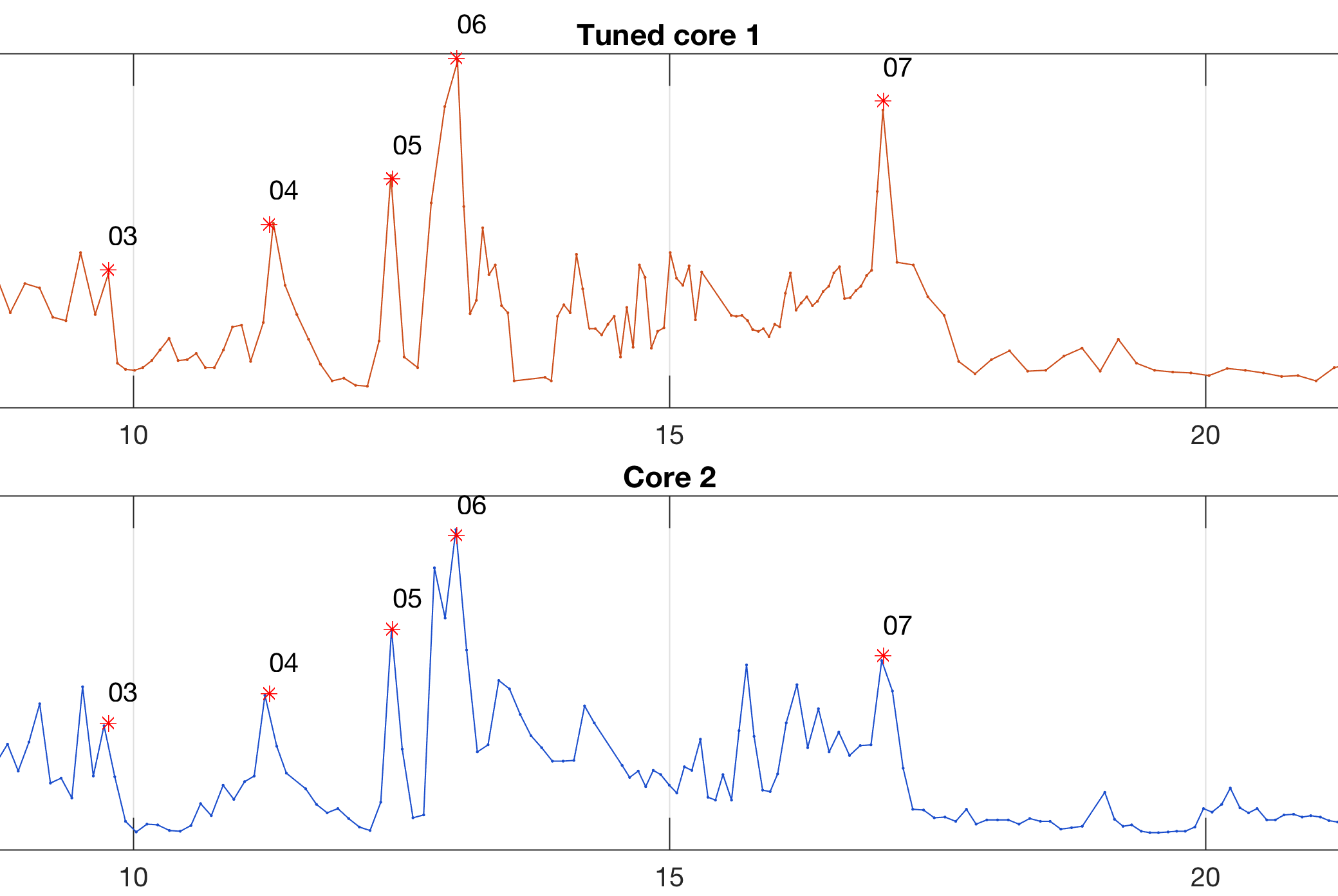
In geological drilling projects, two or more parallel cores often collected in order to compensate for core losses during drilling by overlapping sequences. Correlation of the core is a time-consuming and complex process that is usually done by very experienced geologists. In the Chew Bahir Drilling Project in Ethiopia, as part of the Hominin Sites and Paleolakes Drilling Projects (HSPDP), two parallel, almost 280 m long cores were collected in late 2014. The two cores are correlated using the Correlator software, which is part of the CoreWall package, but we also make experiments using manual and automated correlation using MATLAB. Here I present a script to perform a visual inspection and correlation of two cores using physical properties of the sediment such as the magnetic susceptibility. Continue reading “Stratigraphic Correlation of Multiple Sediment Cores Using MATLAB, Part 1”
AI tools are rapidly changing and improving, we repeated the 16 June 2024 experiment about eight months later and got a completely different result, as can be seen in the report from 3 February 2025. Continue reading “Using Scholar AI to Synthetize Scientific Literature, Part 2”